The Last Lost Kingdom
Lost kingdoms, sequestered civilizations and isolated tribes interconnect fact and fiction, illusion and reality, and imagination and substance. 21st century means of communication, observation, archiving, analyses and publication should ensure the boredom of knowing it all. But hidden gems such as the former Himalayan kingdom of Lo remain untouched.
Nicole Crowder’s photo editing is a stunning exhibition of controlled talent.
A fortress in the sky, the last forbidden kingdom of Tibetan culture.
Nicole Crowder: http://www.washingtonpost.com/news/in-sight/wp/2015/01/05/a-fortress-in-the-sky-the-last-forbidden-kingdom-of-tibetan-culture/

This gate marks the limits of the kingdom of Mustang. An ancient salt trade route that connected the Asian continent from north to south once passed through this door. A forthcoming road to Mustang will soon link China and Nepal. Mustang, Nepal, 2014 (David Rengel)
Sheltered by some of the highest mountains in the world — Annapurna and Dhaulagiri — and bordering China on the Tibetan plateau, hides an ancient kingdom called Mustang, or Land of Lo. The kingdom is often confused with the mythical Shangri-La. The capital of the Mustang kingdom, Lo Manthang, is home to the Loba people, and its walled city is considered by some scholars to be the best preserved medieval fortress in the world. It is a candidate to become a UNESCO World Heritage site.
Thanks in part to its ancestral location — and because it has been forbidden to foreigners until as recently as 1992 — Mustang has retained its ancient culture. Though its capital is located in Nepal, it is one of the last strongholds of traditional Tibetan life left in the world. It remains a restricted region that is difficult to access. Foreigners must obtain special permits and pay high rates to visit it.
Photographer David Rengel visited the region recently to document the culture and observe its long-preserved way of life. Part of the project was realized while he began filming a documentary alongside producer and director by Larry Levene called “The Last Lost Kingdom” for the production company Es.Docu.
The lower part of Mustang yields more moist land and is rich in vegetation, while the more arid land in upper Mustang makes agricultural life a bit harder.
For centuries, caravans roamed the Kali Gandaki gorge between regions of Tibet, China and India with salt, yak wool, cereals, dried meat, spices and other goods on the so-called Salt Road. A road is being built along this route that will directly connect Mustang with China. When the road is completed, it will become one of the most accessible corridors of the Himalayas, and Mustang’s inhabitants’ lives may rapidly change with the influx of foreigners. Many of the young Loba people are waiting expectantly and anxiously for the road’s completion, but many older residents are hesitant about what it will mean for their culture and identity.

Ana Baba is a sadhu, a Hindu practitioner who follows the path of penance and austerity to attain enlightenment. He has decided to go the kingdom of Mustang to meditate. Mustang, Nepal, 2014. (David Rengel)

The new road linking China and Nepal is passable in lower Mustang. The road makes it easier to for vehicles to cross mountains more than 9,000 feet tall. Mustang, Nepal, 2014.(David Rengel)

A man wears a funerary mask of gold and silver that is about 1,500 years old. It was found in a box inside a cave in Sam Dzong, a village that has been the last stop before the border with Tibet and China. 2014. (David Rengel)

Sandup Gurung and his son Sirin Gurung thresh by hand the buckwheat and oats that they collected the previous day. They will used it for roofs, baskets and feed. Mustang, Nepal, 2014. (David Rengel)

Two Loba women carry heavy adobe bricks for building a house. Houses in Mustang are constructed using bricks made of stone and earth. The foundations are filled with debris and the walls with mud. In the background is the ancient fortress of the village of Garphu. Mustang, Nepal, 2014. (David Rengel)

A tributary of the Kali Gandaki River forms during the summer rains in this canyon. In the background are the great mountains of the Himalayan range. 2014. (David Rengel)

Rinzin Wangmo is the first traditional doctor to graduate from Lo-Kumphen Mentsi Khang School of Tibetan Medicine in Lo Manthang. The Loba doctors were also regarded as chemists, botanists and magicians, to some extent. 2014. (David Rengel)

A portrait of the king and queen Raja Jigme Dorge, and his wife, Sidrol Bista, of Mustang in a room of the Royal Palace. The monarchy was abolished on Oct. 7, 2008, by order of the new government of Nepal. 2014. (David Rengel)

The cave of Jhong has a maze of corridors. In the mid-1990s, Nepali archaeologists, in collaboration with the University of Cologne, began exploring the caves where they found several manuscripts and wall paintings that represent the history of Buddhism. Mustang, Nepal, 2014. (David Rengel)

A group of women dressed in traditional garb restore walls at Tupchen Gonpa monastery. They receive three months of training and constant supervision by experts from the American Himalayan Foundation. 2014. (David Rengel)

This holy book with gold lettering was found in the Tasarang Palace’s library. The library contains many sacred books, including the Jhun, a treasure of Tibetan culture transcribed from Sanskrit. Of the three copies in the world, two are kept in the library. Mustang, Nepal, 2014. (David Rengel)

Snow leopards were mummified in the gateway of the monastery of Chuksang. The animals, once believed to ward off evil spirits, are now an endangered species. Mustang, Nepal, 2014. (David Rengel)

These masks, called of figures called chitipati, are used in the traditional dance of the “skeleton lords.” They represent the ephemeral nature of things. Mustang, Nepal, 2014. (David Rengel)

A white horse grazes near a gate that marks the limits of the kingdom of Mustang. The new road will pass through this gate to link China and Nepal. 2014. (David Rengel)
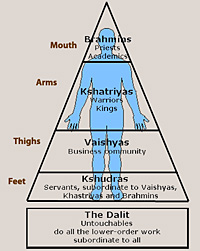
The Indo-Pakistani Caste System: multi-hued Smarties!
Transcript of Dr. Ramaswamy’s radio interview on Caste in South Asia

http://www.english-online.at/geography/india/caste-system-in-hinduism.gif
Hello, Claire Herringstone for the weekly Asia Today.
Our guest on tonight’s program is Dr. Ramaswamy, social anthropologist from Madras University, whom we’ll be interviewing for our viewers on the subject of untouchables within the South Asian caste system.
“Dr. Ramaswamy, good evening and thank you for joining us.”
“Good evening, and thank you for inviting me.”
“Hen-henh. The first question is — how did a country with such fine philosophical roots end up with something like the caste system?”
“Caste is an old, established institution, almost as old as history. Gautam Buddha opened temples to all castes, so even before Christ, it was well entrenched in India. It’s hard to say whether the migrant Caucasian tribes brought caste with them, or whether the social structure of the Aryans of the Saraswati was already based on caste. According to the Rg Veda, Purush, the primal man, destroyed himself to create a human society. The Brahmin priests sprang from his head, the warrior Kshatriyas from his hands, the land-tilling Sudras from his thighs, and the untouchables from his feet.”

http://www.justletmelearn.org/images/casteSystemGraph.jpg
“Indeed, but surely there must be something more than history and religious mythology to enforce it?”
“Yes. Manu’s Laws as they are commonly referred to in the West greatly reinforced the caste system.”
“When was that?”
“About two thousand years ago. Even then, Indian craftsmanship was highly valued beyond its borders. India was renowned as an exporter of the highest quality weapons steel at that time.”
“Could you tell our listeners a little more about that?”
“What the West today calls Damascus steel, and is unable to duplicate. The ingots of this exceptional steel were exported to Persia and the Middle East, where sword-smiths fashioned blades whose cleaving power and flexibility held the Crusaders in awe. Sir Walter Scott’s description of the cutting power of Saladin’s sword in The Talisman is a good illustration. In fact, the pre-Islamic Arab word for sword was Muhannad, meaning from Hind. Thus, at that time, the skills of India’s craftsmen had placed the Indian economy in a unique position in the world. So the Indian leadership was keen to ensure the continuity of these techniques. It was considered that skills were best passed on from father to son. Encouragement soon became edict. A caste-based society further reinforced this institution by adding scriptural and scholarly justification, further empowering the ruling class.”

http://i52.tinypic.com/dxlnxu.jpg
“Most illuminating, Doctor. In India, there’s been this name change. Mahatma Gandhi called untouchables Harijans, and they call themselves Dalits. Why is that?”
“I myself am a Dalit, and we prefer it to Harijan which we consider to have been condescending, and untouchable, or backward, which is an insult.”
“Are Dalits, then, a separate race?”
“Yes and no.”
“How’s that? Sounds like a typically Indian response!”
“I object to that. It’s an anthropologist’s informal way of saying ‘to a certain extent yes’. Indian academics prefer not to speak pompously with laypersons! Anyway, Dr Ambedkar’s research proved genetic similarities between the highest and lowest castes in Maharashtra State.”
“So how do you account for the genetic similarities between the highest and lowest castes?”
“Victors have always raped the subjugated, and India’s states and chiefdoms were forever fighting each other — that’s one reason. Then there were concubines, and love matches. Over the centuries, India’s myriad states of varying sizes saw periods in which they came under a central empire and times when they receded from its grasp. Thrones regularly changed occupants while dynasties waxed and waned. The losers either vanished into mendicant yogi orders, or disappeared into the impure bastis of the untouchables. Thus it is that among the chuhras, lowest on the rung, there are those who talk of royal lineage. The oldest of these are descendants of royal families who escaped conquering blades that sought to eliminate dynastic lines. They are the Chuhra Choudhry leaders of today, and over the centuries, have been inter-marrying with other chuhras.”
“So caste does have something to do with wealth and fortune!”

https://writegill.com/wp-content/uploads/2015/01/283c1-aishwarya-rai.jpg
“Although caste may appear to be almost genetically fixed, it can be won, lost and reinstated by force and fortune. It is also an overlap of geography, race, profession and politico-military power. In Tamil Nadu and Uttar Pradesh, Jatt farmers were considered Sudras. However, the British historian, Colonel Todd attributed Rajput origins to them. This places them in the Kshatrya warrior caste. Up until the rise of Sikhism in the Punjab, Jatts were lower than Rajputs. With the evolution of Sikhism as a militant force, their status rose. In the eighteenth century, as a result of Banda Bahadur’s revolt against the Mughals, Punjabi Jatts assumed the status of Kshatryas, for the simple reason that they exchanged their ploughshares for swords. Tribes that had jealously claimed loftier origins were content to pass themselves off as Jatts rather than Rajputs. Conversely, at the height of Muslim power in India, tribal bards invented fantastic Arab and Central Asian origins for their chiefs. Muslim Arains claimed to be from Iran, whereas as Hindus, they were Kumbhos and claimed Rajput origin which society in general denied them anyway. If, by some freak accident of history, a region had come under Chuhra rule, these very tribes would have started claiming Chuhra origin. Maybe that is why India has this proverb “the buffalo belongs to him who wields the staff.”

http://goanand.com/blog/wp-content/uploads/DSC07759.jpg
“But the Sikhs and Muslims have no caste!”
“Their religions don’t recognize it, but their communities practice it. Despite calling itself an Islamic Republic, Pakistan practices caste! So do the Christians, especially the ones in the South.”
“And why’s that, Doctor?”
“Because, it is India’s curse, with which we are all tainted. On the other hand, as Deepa Kandaswamy says, the West suffers from race and class.”
“Indeed. Could you tell our listeners a little more?”
“Chuhras converted to Sikhism are called Mazhabis, full fledged members of the warrior brotherhood that served the British and now serve India in its armed forces. Chuhra converts to Muslims who remained serfs are called Mussalies, and often with a change in fortune, assume the tribal names of their former masters. Those that managed to leave serfdom took the titles Sheikh and Khwaja, which were the titles of the highborn Muslim missionaries from the Middle East or Central Asia who converted them. Chuhras converting to Christianity took the family name of the British missionary who converted them. Thus it is that in India and Pakistan are found Sheiks who would scandalize an Arab, Smiths and Johnsons who would shock an Anglo-Saxon— we are indeed, a multi-hued nation, like a packet of smarties!”


Pakistani women and an Indo-Pakistan peace deal can end terrorism
Get the moms on board and then pray …


http://www.independent.co.uk/incoming/article9931016.ece/alternates/w620/babyshoe1.jpg;http://pakteahouse.net/wp-content/uploads/2014/12/peshawar4.jpg
As a quick default response to the massacre of 132 schoolchildren and 13 adults in Peshawar, Pakistan on 16 December 2014, the Pakistan government has lifted the moratorium on convicts awaiting the death penalty. As retribution, it implies that these convicts had been the puppet masters of the atrocity. As dissuasion, it infers that they are in league with militants: by definition, convicted criminals are not enemy combatants and come under the protection of the penal code. The measure will allow the next attack to be prepared while it makes good press, and then dutifully slides under the carpet to resurface in different garb when required. In the meantime, the Pakistan army is steadily conducting its operation in North Waziristan.
Pakistan’s professional army recruits from hereditary Kshatriya warrior clans converted to Islam. The combination results in its high combat performance. But in this case the army is out of its depth. Like the US Navy SEALS who got Bin Laden, the Pakistan Army needs precise addresses and secure transport. It apparently has neither, only a vague geographical sector where it advertised its arrival, like its American step-cousin, losing the element of surprise and allowing targets to move house.
If reports are to be believed, elements within Pakistan’s security establishment have these addresses, but need the occupants as their delivery system for asymmetric mischief with India over a hemorrhaging property dispute.
In the likelihood that the addresses are surrendered and adequate transport is available, the targets will be efficiently dealt with.
But that only postpones the problem.
The mothers, paternal aunts and paternal grandmothers embedded in the joint family system will then swing into action. The targets’ surviving sons will be reared as vengeance machines, and in another few years, regardless of right or wrong, will seek to avenge their fathers. They might repeat their fathers’ acts, or attack senior officers involved in the operation, or assassinate their children.
The generals know this.
So once the Pakistan government is through with this hanging business and mob blood lust abates, they should go after the addresses. The intelligence officers who have them (if they do), are neither former United States’ Cold War mercenaries nor corrupt. They are Pakistan Military Academy graduates imbued with professional integrity. They have been conducting their operations with the conviction that they are best serving their nation’s interest in this way. Be that as may, that is how it stands. So grabbing a few and water boarding them is another dead end.
First, these officers need to be convinced that surrendering addresses is in the highest interest of their nation— an indispensable success cog.
Second, they and their families will need to go into a witness protection program— a tall order for a country renowned for its level of corruption.
Third, and most difficult, is peace with India, which would deprive these officers and their younger protégés of any motive to make and nurture such contacts.
Parallel with this measure is the mobilization of women, crucial to long-term success.
Only other women can suborn the mothers, paternal aunts and paternal grandmothers of the targets from a tradition practiced for thousands of years. They call it badal— exchange, a two-syllable, short word for a process that is propelled by dynamics indefinable in western terms.
So, unless a concentrated action to get these wives, mothers and sisters to condemn their kin, reject this custom and decentralize the joint family system is not launched, finding and punishing the latest perpetrators will only postpone further massacres by a decade or so.
Pakistan’s hello jee fashion parade ladies now need to justify their university education and drawing room hai jee patriotism by organizing women’s study groups on this subject. Their husbands are decision makers. These women need to brainstorm the issue, refine their ideas, play devil’s advocate with each other, and present the distilled results to their husbands with stern ultimata.
Mothers of victims and potential victims can convince other women that their husbands, sons and brothers were in the wrong.
Then it will end.
Badlu Ram could reduce India-Pakistan Tensions
Left to itself, moral uprightness can degenerate into joyless self-righteousness or intolerance of the opinions and behavior of others. It can shrivel into a dead end of blood drenched eloquence. The presence or absence of music and the type of music to which a society responds draws a thin red line between the balance of its degree of righteousness and self-righteousness. Cultural continuity, and the intensity of its practice can be studied in components of society that seek to preserve its status quo even at the risk of life and limb, which is one way to describe an army.


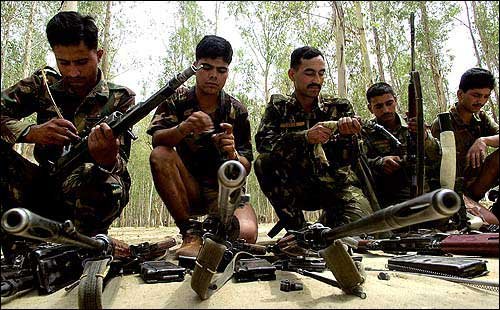
Punjab Regiment L to R : Pakistan, undivided & India : http://upload.wikimedia.org/wikipedia/commons/8/8b/33rd_Punjabis_(15_Punjab)_(PMs)_1910.jpg; http://defence.pk/attachments/8000c3ece83dfbdfb15dd6309b0f74b7-jpg.85154/; http://media.sacbee.com/static/weblogs/photos/images/2011/jan11/republic_day_sm/republic_day_10.jpg
Let’s take a look at the symptomatic evolution of war marches of India and Pakistan considering that India seems to be heading Pakistan’s way.
Like all warlike cultures, India and Pakistan, whose regiments were divided only sixty-seven years ago, cherish their war songs they don’t sing, since of course they are neither sissies nor mirasi minstrels!
The exception is the Indian Army’s Assam Rifles which owes a debt to Captain Manjit Singh, a Christian officer born in Jammu, graduated from Madras University, an ace hockey player and the guiding genius behind the Badlu Ram ka badan song.
The light-hearted words reflect the dashing merriment expected of young officers close to their troops, enjoying their chota pegs. A rifleman, eyeing up a pretty girl, was put on pack drill for neglecting to clean his rifle.


http://worldonline.media.clients.ellingtoncms.com/img/photos/2002/05/21/3AindiaNEW_t640.jpg?a6ea3ebd4438a44b86d2e9c39ecf7613005fe067; http://3.imimg.com/data3/IS/NM/MY-9325985/41sarj9ocbl-_sl500_aa300_-250×250.jpg
Enter Badlu Ram, who died in the ‘Japan Waar’, but the quartermaster was smart, didn’t declare his death and kept drawing rations in his name! The refrain, acknowledges that while Badlu Ram’s body is under the earth, his rations are still drawn— 100 years Hallelujah— bang on John Brown’s body! And here it is: https://www.youtube.com/watch?v=lIl1nL64KNI
This lilting march says that at least Assamese warriors do not take themselves too seriously, in accordance with General Ingle’s advice in A Soldier’s Prayer for his Son. Even their battle cry is neither religious nor nationalistic— Rhino charge!
A choice uncharacteristic of India and Pakistan whose battlefield losses indiscriminately come under Martyred and not Killed in Action, with both countries seeking to claim the self-righteous high ground.
For example, musically, one cannot disassociate the Pakistan Army from Ae Mard e mujahid Ja’ag zara https://www.youtube.com/watch?v=oFmHxJcG7u4. Although secular India might allow regiments to keep their religious battle cries such as Bol na’ara Haidari, Bolé so Nihal and Jai Ma Kali, their marching songs enshrine cheerless nationalism, such as Qadam Qadam, https://www.youtube.com/watch?v=9sJqJeLwww0, the delightful exception being the Madras Regiment’s Bollywoodian Suhana Safar aur yeh Mausam Rangeen https://www.youtube.com/watch?v=mhto634aZIU — Jeeyo veer Madrasi!
But it was not always so glum.

http://www.nam.ac.uk/online-collection/images/960/1-999/750.jpg
From Sepoy to Subedar: the memoirs of Subedar Sita Ram Pande (1873), reveal that the Bengal native Infantry, formed of Punjabis, Pathans and Uttar Pradeshis, used to sing Kabhi sukh kabhi dukh, angrez ka naukar— sometimes pleasure, sometimes pain, a servant of the English!
The Karnatic Regiment went even further, singing of Queen Victoria being a “very good man…” http://research.culturalequity.org/get-audio-detailed-recording.do?recordingId=24077
The pre-partition, undivided elite Punjab Regiment marched to the pederastic, Zakhmi Dil, which means Wounded Heart. John Masters in Bugles and a Tiger writes of “one of the most famous of Pathan songs, the ‘Zakhmi Dil’ (‘Wounded Heart’) begins with the words, ‘There’s a boy across the river with a bottom like a peach, but, alas, I cannot swim”.

http://mentalfloss.com/sites/default/files/styles/article_640x430/public/butt_slap.jpg
Alpha males have always flirted with homosexual phrases and conduct to flaunt their heterosexuality like sportsmen patting each other’s bottoms. Soldiers of elite units are no different.

http://upload.wikimedia.org/wikipedia/commons/thumb/b/b0/2june_2007_296.jpg/800px-2june_2007_296.jpg
Take into account Le Boudin, anthem of the French Foreign Legion, in time and space as far apart from India and Pakistan as it could be.
The prelude refers to a round-bottomed bum-boy getting sodomized in the priest’s tent, and closes with Hey round-bottom, drop your trousers, censored in public in the interests of lofty political correctness!
The South Asian constituents of a five thousand year old tradition have been successfully battered by self-righteousness. The obscurantist wind that suffocated fifty centuries of renowned tradition has become a tsunami. It has spawned mass murder in Pakistan and not to be outdone, India’s restless zealots also threaten to lead its secularism astray. .
Badlu Ram is a gust of fresh mountain air to ease the suffocation and touch base with a balanced past. India and Pakistan should be bellowing their lungs out singing Badlu Ram ka Badan.
Thank you, Major Manjit Singh.
Ray of hope for Pakistan
Santa comes to Joseph Colony
Short piece, moving pictures
by Ammar Shareef, from Dawn.com
In March 2013, an angry mob of more than three thousand people stormed Joseph Colony – a Lahore locality with an overwhelmingly Christian population – and set more than 100 homes on fire.
Lahore police stood by as the inflamed crowd torched the humble homes, admittedly avoiding clashes. Despite the outrage the incident sparked, the government took little real action. Twenty-one months later, the ghosts of Joseph Colony still haunt the Christians living in Pakistan.
A number of individuals have since sprung into action to try to make up for the senseless violence, and, in however small measures, undo the tragic wrong.
For the second year in a row, an anonymous donor managed the distribution of Christmas gifts to children of the colony’s Christian community. Distributing cricket bats, badminton rackets and colouring books among children is certainly no compensation for what happened in March last year, but it did manage to spread some smiles on the faces of the kids.
To celebrate your biggest festival in a decidedly hostile environment — no child deserves that. And it should not have been this way. We should have put an end to the madness once and for all. We should have undone every single thing that led to that situation to ensure it didn’t occur again.
But we didn’t. And it did occur, again.
And now it seems that all our children stand terrified in the midst of a menace they had nothing to do with.
Explore: Remembering Peshawar: A sombre Christmas for some
As I captured the endearing smiles of these children, I was overwhelmed with conflicting feelings: pure joy and terrible guilt.
The guilt will stay, but for a few, dear moments, let us get into the Christmas spirit and partake in the simple joys of these children.
Merry Christmas!
 |
 |
 |
 |
 |
 |
 |
 |
 |
 |
 |
 |
 |
 |
Ammar Shareef is a photographer based in Lahore. He can be reached at ammar.shareef@afterhoursgroup.net
http://www.dawn.com/news/1152898/santa-comes-to-joseph-colony
Hidden in Sight Remedy for Christmas excesses
South Asia’s digestive enzyme
Hark ye— belching be the act of expelling air from thy stomach through thy mouth: t’will hold thee in good stead for thy Christmas gluttony but forget not the hand ‘fore thy mouth.


http://cache3.asset-cache.net/gc/981715-002-saudi-arabia-nafud-desert-shammar-tribe-gettyimages.jpg;v=1&c=IWSAsset&k=2&d=D7ZucN885lpRxlg1Qqc1lQnf7Ubfja%2FD%2BdvXYEgVog8%3D; http://thelowercasearab.files.wordpress.com/2011/11/arab_food.jpg
Belching and digestion are blood relations estranged since the end of babyhood.
It is generally believed that east of the Suez, belching after a meal appreciates the food’s gourmet credentials. In South Asia, however, belches acknowledge the food’s digestive properties. Respecting the cooking process and selecting spices proportionate to the ingredients triggers the breakdown of food into energy. The unprompted belch signals digestive victory.


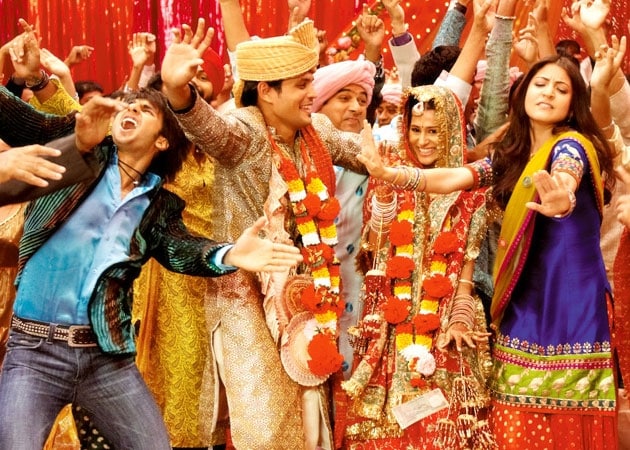
http://i.ndtvimg.com/mt/movies/2012-10/weddingbollywood-big.jpg; http://weddingpakistani.com/wp-content/uploads/2012/04/10-best-caterers-for-Pakistani-weddings.jpg; https://writegill.com/wp-content/uploads/2014/12/c0738-suprememehandi.jpg
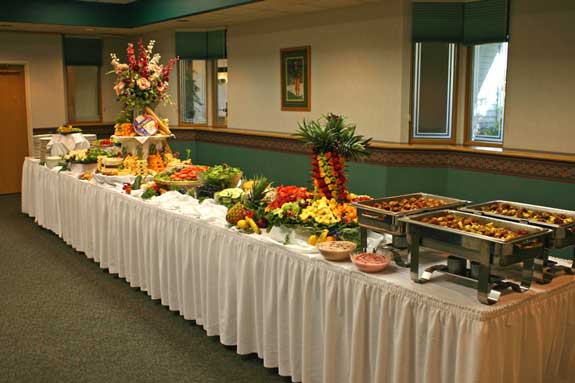
Hedonistically rich South Asian feasts incorporate digestive dishes and accompaniements: the belch reassures the hosts that the digestive tract is tickety boo.
Since men and women not of the immediate family eat separately at feasts, the volume of the belch was adjusted to reach far and wide.
Even in between meals, expulsion of intestinal gas or air from the mouth or lower down, noisily or in silence, are considered signs of good health, despite allopathic, ayurvedic and yunani medical solutions to the contrary. The belief is even expressed in a rather rude rhyme.
This obsession with digestion was thus among South Asians, and still is.
But then what about their British first cousins, who’d figured out the triangular relation between heart-healthiness, eating beans and farting?

A host will offer second and third helpings of a particular dish with arguments based on its digestive properties. It is also a polite host’s manner of easing the way for increased consumption under the guise of good digestion rather than greed. My wife managed to wean me off the habit of extolling the digestive merits of each dish when her English compatriots were at our table. However, the habit still tends to rear its head in defiance at the oddest of moments.
Accompanying salads, pickles, chutneys and raitas, doubtlessly stand-alone taste enhancers, are actually supporting elements for the main thrust of meat dishes which are a digestive challenge. So a wedding feast is invariably concluded by spinach and meat, the spinach ensuring against any risk of getting blocked.
The wise guest, hedging bets, will of course have a drink of isabgol da chilka— psylliam husk— before going to bed that evening.
In their Anglo-centric cultural myopia, the British unblinkingly lumped South Asian belching on the Middle Eastern logic. Hardly surprising when Collins & Lapierre’s acclaimed Freedom at Midnight remarks how little the British actually understood the Indian culture beyond what they needed to ensure their rule.
Mazhar Shah, Pakistan’s reigning celluloid villain of the 60s, summed up the relations between digestion and belching in one of his most famous lines: “I could eat up your whole family and not even belch”!
For the interested, listen at: https://www.youtube.com/watch?v=2SQsBWYeriM

Diasporic Pakistani Christmas menu
Biryanis and Christmas cakes from Pakistan to Europe


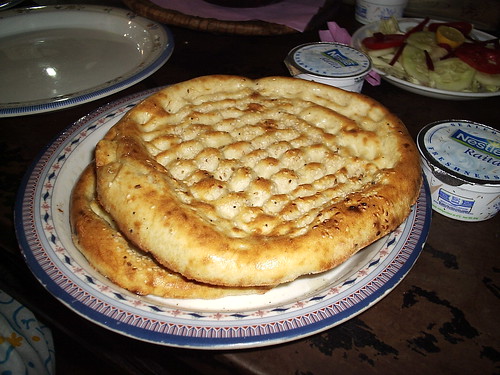
http://t3.gstatic.com/images?q=tbn:ANd9GcQtGm4OMa5mTQDKZYlJjopdfnx9k8p08U_FEyiTfEurxpldZphEFGxoznRo; http://images.meredith.com/rrmag/images/recipe/ss_RU190957.jpg; http://goodtoknow.media.ipcdigital.co.uk/111/000005f84/b03c_orh220w334/classic-chic-christmas-cake.jpg https://farm2.staticflickr.com/1185/928445779_066ef51c1a.jpg;
Pakistani Christians have been able to create their own Christmas menu without any conflict with their belief system, combining the best of several worlds. Ladoos, gulab jamans, pala’a and sha’ami kababs had no quarrel with Christmas puddings, roasts and trifles, just as shalwar kameezes, turbans, achkans and suits harmonized with comfort. Christmas trees have always been a minority option.
Pakistani Christians are all converts from Hinduism, Budhism, Islam, Sikhism and Animism. The converts’ pre and post Christian socio-economic parameters continue to overlap the conflicting forces of their pre and post Christian culture.
The outward manifestations of culture can be reduced to the life cycle of birth, marriage, and death, with the addition of the major religious festivals.
Before the creation of Pakistan, these celebrations retained their Hindu bias within a British cultural framework (or vice-versa). After the rebirth of the Indian Christians as Pakistani Christians, being considered a loyal citizen of the Islamic Republic became an imperative of survival. Traces of British or Hindu culture were seen as subversive. Choices were made by families and groups of families, leading to more diversity in cultural practices after partition.
Despite their best efforts, Christians in Pakistan were viewed with a faint whiff of suspicion as a residue of colonialism whose loyalties lay elsewhere. This suspicion formed the moral justification for multi-level and multi-purpose discrimination.

https://writegill.com/wp-content/uploads/2014/12/118af-ceasarcoin4.jpg
The general feeling among Pakistani Christians was that their efforts at giving to Caesar were lost in a bottomless pit. With the concepts of jus soli and jus sanguin non-existant, they were, in de facto terms, illegal aliens in their ancestral homeland. They felt they would be better off in a place where they could succeed through merit without having to look over their shoulders.
That “place” was the West, the Mecca of Pakistanis of all faiths. Many Christians came to Europe by first getting work visas for Saudi Arabia and the Gulf states that provided them with seed money, and then making their way to Europe, an enterprising albeit ironic exit from a lose-lose situation.
In Europe, their identity went unnoticed. Profession of any religion was treated suspiciously, most of all Christianity. Europeans, considered Christians from the former colonies an embarrassment. They were living reminders of a period they were being educated to abhor. And besides, life was busy.
Yacub Masih, General Secretary of the UK Asian Christian Fellowship in his speech to the House of Lords on 4th February 2005 said: “When I came to this country 30 years ago I was very happy thinking that I am going to a Christian country but I was disappointed … people in this country have no interest in faith … They only know about Santa Claus and Cadbury Easter eggs … .”

http://funmozar.com/wp-content/uploads/2014/12/Santa-Claus-02.jpg
Either ways, the Pakistani Christians in Europe quickly lost their romanticism, and then got down to doing what South Asians are jolly good at — working hard, outpacing rivals, and succeeding in the best of their warrior traditions. Denied access to opportunities in their homeland, they found themselves in a society that just let them get on with it. If they wanted to work longer hours, save, and send their children to the schools that offered them a better opportunity, so be it.
Following September 11, and the July 7, 2005 bombings in the UK, the identity of Pakistani Christians, subsumed within Asians of other faiths and agenda, is viewed with as much suspicion as other brown skins.
So that is why, ensconced in their unique mental space, the Pakistani Christian Christmas menu remains largely unchanged. Even a turkey is properly spiced up, pulao or biryani are a must and ladoos and gulab jamuns compete for table space with mince pies or French bûches.
There is, of course, a tree and there are wrapped up gifts but Pakistani Christians wish each other Happiness rather than Merriment!


Punjabi Christmas Story— part II of II
Piaro Masih Blackiya’s 15th Christmas Day

https://www.worldwatchmonitor.org/news/Article-images/Pakistan/memorials_in_church_518_x_388.jpg
So by the afternoon of the day before Wada Din, the house looked as pretty as the city Sa’ai’s cakes. There were strings of colored paper flags crisscrossing the courtyard and all the rooms, with buntings and tinsel stars. The courtyard of the house was red with powdered bricks, their dust kept down by sprinkling water over them every day. Be-ji had bullied the Mussalies into making her a big wooden cross, decorated with the boughs and flowers we’d brought from the dak bangla. She hung it in the baithak, which was really done up. The steps led down to a dusty patch of ground, exactly the same size as the verandah. We cordoned it off with half-buried bricks at an angle, painted white, and spread the patch with red brick powder. At the entrance we made an arch of reeds, covering it with crepe paper, and on top of it was a big WELCOME sign in English.
The sight of all this hit you in the gut, low and hard.
And we were prosperous enough to hire the catering services of a barber. Apart from haircuts, manicures and arranging marriages, they are also hereditary caterers. By the evening, Be-ji, and the village barber’s wife and niece had finished making large para’at dishes of kheer rice pudding, semolina halwa and vermicelli savvayyan which would be dished out to guests and people less fortunate than us who came to wish Wada Din Mubarak. The packets of fruit and sweets wrapped up in colored tissue paper and tied with gold and silver gota ribbons were for selected neighbors and friends.
Be-ji was just starting the night before Wada Din dinner when Baba’s guests started arriving. They were all male, king, and booze would be served. Women hardly visited Be-ji, except for relatives, and as a decent, God-fearing Gujjarie, she wouldn’t just go out by herself to get our noses rubbed in the dust. Most of the time, we were too busy ensuring the honor of the family to take her out, except to her brother’s every few months.
We had hangovers next morning, but we all hugged and wished each other Wada Din Mubarak. Be-ji warmed up water for bucket baths, and after that gave us sour lassi buttermilk, which straightened out our heads. She kissed our foreheads, which gave me, and I suppose Ma’an too, that warm feeling inside of us which is something that makes my heart ache and my liver cool when I think about it now, king. Breakfast was roasted eggs the city folk call an amlaete or something, and parathas, which are rotis kneaded in ghee, rolled out, then folded in layers with ghee between each layer, and fried on a tawa griddle. We drank hot milk with honey. After breakfast Be-ji brought out the presents she had hidden from us.
Soft white Kashmiri pashminas. We thanked her and she went back to dress up for church, and Baba took us into the trunk room, lined with its enormous paetis. Each paeti could take up to five cotton filled quilts and mattresses.
Baba unlocked one of the paetis with a flourish.
“What is it, Baba-ji?” Ma’an and I said together.
“Shut up, pimps. It’s something I’ve kept for you for some time.”
He dug his hand beneath the quilts in the paeti and when he brought it out, Ma’an and me stopped breathing. Two brand new nine millimeter Stenguns. Baba looked at us and smiled.

http://www.guns.com/wp-content/uploads/2012/12/sten-gun111.jpg; https://encrypted-tbn2.gstatic.com/images?q=tbn:ANd9Gc
“You’re old enough to give up your hockey sticks now.”
And that we were. We were also ready for black trips across, like Zafar and Ashraf, Ashiq Blackia’s boys. But Baba was scared of Be-ji, and had put it off. Maybe now? In fact, kids are the best carriers. Stuff a couple of dozen Reiko watches in a bale of grass, and put it on the kid’s head. He walks across the border into India in broad daylight, scythe in hand, and no border guard asks questions. It’s obvious he’s just a grass cutter out to get feed for the family buffalo. He does the same on the way back, only this time he’s got cardamoms or saffron stuffed in the grass.
Baba shut the lid of the trunk.
“Come on. These are yours, but we’ll keep them in the trunk for now. Time to get dressed for church.”
Fifteen minutes later, we were all ready. Be-ji was wearing a brocade shalwar and kurta, with a design of big flowers, just like Malika Elizabeth. She had a white pashmina shawl embroidered with silver thread over her white mohair jersey. The shawl covered her head. She looked such a saint I wondered how she gave birth to a couple of vusaigs like us. I still do.
Baba was in his long vicuna achkan coat, white shalwar, and gold embroidered turban rest around which he had wound his starched, flaring white muslin turban. On his feet were black patent leather pumps. Ma’an and me were in brand new, gold embroidered curly toed khusa shoes, white shalwar trousers, bosky silk kurtas and identical green sweaters. The white blankets were thrown over one shoulder.


http://i.dawn.com/2012/08/7-sukh-chane-trees-qamar-mehdi-670.jpg; http://irissansfrontieres.files.wordpress.com/2014/05/benares-tonga.jpg
Near the sukh chaen tree, the gray was hitched to the tonga, our two wheeled chariot, which would take us to church. Mansha and Boota held the reins in their brand new Christmas clothes. They had to be worn without the initial washing so everybody could see they were new. Both Mussalies smiled, touched their foreheads with their palms and said ‘Wada Din Mubarak’.
“Khair Mubarak,” we replied.
I noted that Be-ji had given them exactly the same white pashminas. They were our men and we looked after them like our own.
Baba gave them fifty rupees each and took the reins. The Mussalies would stay home to keep an eye on things. Besides, they were Muslim, and what would they do in church anyway, saint?
The horse trotted at a good clip, the tonga comfortable, with almost new springs. The barley, wheat and sugarcane crops in the fields around us had a light dusting of frost. The sunrays had started softening the frost, and it was like dew in the daytime. If it all stayed that way, we’d have a good crop in spring. And after the harvest we’d beat the t’tholak and dance the p’hangra.
Outside the church all the local Christians were gathered in their new clothes. They were little people, sweepers mostly, but also carpet weavers or brick kiln workers, when they were lucky. Otherwise they had to empty out people’s chamber pots – but we were all called Sa’ai Chuhras behind our back, anyway. Like Mansha and Boota, they hadn’t washed their coarse cotton clothes so’s not to lose the newness. A dozen beggars were squatting on the ground, begging for alms in the name of Yesu Masih. No self respecting Muslim would refer to Yesu Masih by any name other than Hazrat Issa, a prophet. Our worship in church made us heretical blasphemers, deserving death. But the beggars outside the churches were hereditary professionals, fakirs by caste, like Inayata Fakir.


There was one beggar who looked frightening.
A little creature, with a very small head, large ears, puffed up cheeks, drooling from the mouth with wild eyes. Behind him was another man with a beard, his brother or father. The little freak came towards me with his hand raised, shrieking like a demon. I prepared to defend myself but Baba gripped my shoulder hard.
“No, he’s trying to bless you. Give him some money. He’s one of Shah Daula’s chuwas.”
My hackles rose as the creature swatted my head with shrieks and shoved a kashkole bowl under my nose. I fished for some money, and put in ten rupees. The creature’s relative smiled, and raised blessings to my name.
“Blessings, O’ blessings in the name of the great saint Shah Daula of Gujrat, shagird disciple of Shah Massat the small headed one. May your line never lack offspring, and your wife always be fruitful.”
We passed by into the churchyard, many of the Sa’ais smiling at the blessing.
Padre Amrit Masih had a frown on his face when he met us.
“How cruel. In the name of the saint Shah Daula who lived three hundred years ago, good Muslims donate a child to his shrine believing that the mother will conceive again. The guardians of the shrine lock a steel cap on the child’s head. The child grows up a dithering idiot, a chuwa or rat of Shah Daula.”
“I’d heard of them, but never seen one, Padre Sahib,” I said. “Why do they do that?”
“So the Chuwa can shriek blessings, drool over people, and collect alms.”
“Do they earn much, Padre Sahib-ji?” Be-ji asked.
“More than a Police Deputy Superindent,” Padre Amrit Masih said.
I felt disgusted, and looked straight at Baba.
“Let’s free him, Baba-ji.”
Baba and the Padre shook their heads slowly.
“No, puttar,” Baba said sorrowfully. “We can do nothing about this practice. Two kicks up his ass, and the chuwa’s guardian would run off. Then what do we do with the chuwa? A crowd of Muslims would attack our dera, the church and the basti, and burn them to the ground. We’d be put in prison for kidnapping and hung on a fake murder or blasphemy charge. The Muslims will sort out this problem one day. But we don’t want to burn in their bonfire before that.”
There was still time before service, so we stood in the churchyard gossiping, embracing, and wishing each other Wada Din Mubarak. Some of the poor folk came up and touched Baba’s knees. He was their protector and hero. I felt funny, and sad, that somebody would have to do that.
Baba had a stack of loose, five rupee notes, and when he gave them to one of these little guys, I felt sort of strange. We were just five acre zimeendars who’d become a little better than others due to Baba’s black, but we were all the other Christians had to look up to. Some of the young guys were hoping for careers like Baba, and they came to pay their respects, hoping for patronage at some time in the future.

For Be-ji, church in itself was a big event. She was with the women folk she knew, who were making admiring sounds at all her fine clothes and jewellery.
Some of the enterprising Sa’ais had put up stalls outside the church. Part of the money would go to the church, and Padre Amrit Masih would be pleased.
Our church was simple, with no benches. The floor was of beaten earth. It used to be covered by rush mats, till after one of Baba’s big deals he bought durrie rugs for the church. The inside was all decorated for Christmas with wreaths and banners in Urdu and English. There were little clay fire pots burning coal placed within the aisles. Padre Amrit Masih gave a good sermon, and it was all about the birth of our Lord. Near the altar there was a guy with a t’holki drum and another with a harmonium, and we sang the Christmas songs to music. It was good.
Church being over, we went back home to receive people who’d come to pay their respects and exchange wishes with us. It was also the day they could ask Baba for all sorts of favors, and he had to grant them.
When we reached the dera, Baba again spread his fivers among the waiting tenants, and Be-ji supervised the distribution of the packets of fruit, sweets and nuts to our village friends.
Unlike us, the poor Sa’ais would get drunk on kikar desi with alum added to it for an extra kick. Others, even poorer, would just cook their bit of meat in the p’hang booti from which marijuana is made. At least for one day in the year, these guys would forget they were Sa’ai Chuhras.
In the evening, Wilayat came to tie up the Bank caper. I was reluctant, but Baba shrugged.
“Since he knows about it, we might as well take him along. It would be dangerous otherwise. And anyway, if he wants a name, let him try, though he won’t go far. He doesn’t have the star that brings God’s Grace.”

.jpg)
Punjabi Christmas Story— part I of II
Piaro Masih Blackiya’s 15th Christmas Eve

http://t0.gstatic.com/images?q=tbn:ANd9GcQzTi_6-xtOGGIKV-N-EdklzgwYlYMrGLYvu-OH_q_MMIr_VV8tyl_SxPUFfQ; http://static.panoramio.com/photos/large/73200828.jpg
Two weeks before the Wada Din, Jesus’ birthday, our simple brick house was spick and span. Ma’an and me were supposed to do two things – decorate the house and make special Christmas desi. Not from just gur and kikar bark.
No, Sahib-ji.
This desi that I still make on occasion beats the best wilayati, whether it’s Black Dog or some disgraceful angrezi animal of another color. Ma’an and me had put a big manji bed in the courtyard, in the corner that got the sun all day. We spread a cotton sheet on the ground and piled it with oranges.
“The knives?” Ma’an said.
“I’ll go and get them.”
I ran into the kitchen and came back with two knives.
In about half an hour, we had half filled the large, five-gallon clay matka with oranges in their skins sliced in half.
“Sugar, Ma’an,” I said, and he scooped up a cup and handed it to me, pure, mill made, white sugar.
“More,” and he continued handing it to me, till I had the right mixture – five seers of oranges to two and a half seers of sugar. Then I mixed whole spices – cloves, dried mint, coriander seeds, rose hips, cardamoms, cinnamon, pepper, and aniseed and added them for fragrance. To give it the added Wada Din kick, I poured in a few ounces of khas extract. Then we sealed the lid of the matka with freshly kneaded dough. We carried it carefully half an acre away from the house, where we had the compost heap and buried it securely, ready to gag by the end of it, but we made it!
A week before Wada Din Baba had brought in a load of the food specialties. Mostly expensive dry fruit, but a lot of fresh fruit and sweets and cakes. There were no dukhies in the baithak, and none were expected, but there would be important guests on the night before Wada Din. Other guests would drop in after the Wada Din church service. That was one day when Baba always attended Church.

https://writegill.com/wp-content/uploads/2014/12/0e71c-dsc04051.jpg
It was the night before Wada Din. We were simple village folk, different from the city Christians who get a tree and spend a lot of money decorating it. We hung up crepe paper flags and tinsel decorations, made wreaths and crosses, got drunk, ate meat, and fought each other. Come morning, we’d work out the hangovers with sour lassi buttermilk. In those days, the government walas weren’t that bad, at least not during Wada Din celebrations. Those of us who weren’t blackias, just poor cultivators, or sharecroppers, weren’t stopped from burying a pa’anda pot or two, and if they got drunk and only fought among themselves and the injuries were just minor, the pulsias ignored it. But all that’s a long time back. Now there’s something dark, and dreary, and the whole land is being wasted by bigotry, with the joy in peoples’ veins just shriveling with fear.
It was late afternoon the day before Wada Din eve when I heard a bicycle tinkling its bell outside the dera wall. It was Padre Amrit Masih announcing his arrival.
I opened the door. The Padre was standing with a smile, bicycle propped up against the sukh chaen tree.

http://www.itravelnet.com/photos/as/india/maharashstra/mumbai/indian-bicycle-on-banyan-tree.jpg
“Sala’am Aleikum, Padre Sahib,” I said.
“Sala’am, Piaro puttar,” he replied with his hand over my head.
I took his bicycle, as was proper, raised it over the threshold and took it into the courtyard.
Be-ji came out of the kitchen, head covered, rubbing her hands, a shy smile on her face.
“Welcome, Padre Sahib-ji,” she said.
“Sala’am, mother of Piaro,” and the Padre put his hand over her head. Ma’an was behind Be-ji, and received the same blessing. Baba was out in the fields, and Ma’an ran off to get him.
“Take the Padre Sahib to the baithak, Piaro,” Be-ji said. “I’ll send halva and tea, Padre Sahib.”
“Haw hai, you don’t have to do that, I just ate something before coming,” the Padre said. He had the right manners.
“For the joy of our hearts,” Be-ji said.
We were just outside the door to the baithak when Baba got back, with Ma’an behind him. The Padre Sahib and Baba embraced, and Baba seated him in the center of the room, on the divan. I fluffed a bolster pillow behind him, and he looked pleased. Ma’an went out, probably to get the tea and halva as the Mussalies had left for the Padre’s home with the annual Christmas gifts of rice and grain. I sat down to listen.

“So what’s the talk, Padre Sahib?” Baba asked.
Padre Amrit Masih sighed.
“Some good, some bad. We’re going through hard times.”
“I heard of Choudhry Fazal Dad’s boy in T’hoke Sayyadan.”
So had I. It was Fazal Karim, the Sa’ai-hater from school, years ago.
“They say he actually did it. Isn’t that a little young?”
“Padre Sahib, kids who live in the country see stud animals at work.”
“Yes, that’s true. But to force a girl who only comes to clean the house and the latrines.”
“It’s been going on for centuries, Padre Sahib, and you know it. The untouchables may be touched for pleasure. For the rest of the time they may drown in their misery.”
Ma’an came in with a tray, covered by a cloth. He put it down on the table, and I got up to help him with the service.
“What formality! I’m just the village Padre.”
“A man of God who brings blessings to this humble dwelling – and put a few more nuts and raisins on Padre Sahib’s halva, Piaraya!”
“Yes, Baba-ji!”
The halva was as rich as a visiting Padre’s should be, with k’haeo all around the edges of the dish. I didn’t just pick out more nuts and raisins, I also scooped up extra k’haeo and poured it over the Padre’s plate.
He sighed with pleasure when he saw it.
“May you live long, Piaro,” and I was pleased to get his blessing. Baba smiled. The Padre put a spoonful of the halva in his mouth, chewed, and then gave a big smile.
“Excellent, and generous, as always.”
He was right.
We all enjoyed the first spoonfuls in silence, and then Ma’an served the tea
“I visited the girl’s family. The tragedy has shattered them, and they fear for their lives as well.”
“I went personally to see them,” Baba said quietly.
The Padre raised his eyebrows.
“Last night, at about two in the morning.”
So that’s where he’d gone. The sounds I’d heard hadn’t been a dream
“And?” Padre Amrit Masih heaped another spoonful of halva into his mouth. There was a ring of k’haeo around his lips.
“I swore them to silence. Gave them two thousand rupees and a revolver with fifty rounds.”
“But that’ll only get them killed as well!”
“No Padre Sahib, it’s only for self defense. Within the next four weeks, guides will come to take them away.”
“Where will they go?”
“Across, to India. There’s a Mission School in Jandiala Guru.”
“What’ll they do there?”
“Live as respectable untouchables. They’ll sweep floors and empty out shitpots without the fear of having their daughter raped, then murdered so she couldn’t be a witness.”
“Why did they commit such barbarism?”
Baba hesitated.
“The boys are old enough to hear this. She was violated every day by Fazal and his father. When she became pregnant, they wanted her to get rid of the baby. She refused, and they got rid of her. Strangled her, then hacked her to pieces with a toka, threw the bits of her body in a field, and ploughed it over. Then spread rumors that she’d run away from home to be a prostitute in Lyallpur.”
I felt like throwing up.
“Since the Munawwara Sultana murder in Gujrat, it’s becoming a habit,” the Padre commented. “I’m very pleased you’ve taken care of the affair, and discreetly. You must watch your step. There are many eyes on you, much jealousy. May the Grace of Lord Jesus Christ always protect you.”
“I walk in silence, and try not to belch too loudly.”
The Padre nodded his head.
“I heard in the Bishop Sahib’s office that the higher councils of the Ulema are lobbying for a strict blasphemy law. Then they won’t have to kill and become fugitives. Two witnesses against a Christian will get his neck stretched.”
“Fazal Karim’s disappeared, Baba-ji,” Ma’an said.
“Ma’an and I should have ripped his balls off at school, castrated him,” I said.
“Piaraya!” Baba’s voice was hard.
“Sorry, Padre Sahib-ji,” I said for blaspheming in a holy man’s presence.
“God has already forgiven you. Where d’you think Fazal is, Rehma?”
“Like every other fugitive, in the mountains of the Afghanistan frontier. He was getting quite religious. He’s in a Madrassa school, getting ready for a future jihad!”
“And the Maulvis accepted him after his heinous crime?”
“He demanded succor. By tradition, they have to grant it. He is obviously doing penance for his crime under the strict supervision of the Maulvis. He will obtain their forgiveness by diligence, and then join a Jihad. One day he will come back, and settle scores with us.”
And I’ll stuff his balls in his mouth, I said to myself.
Padre Amrit Masih talked a little while more, mainly about crops and the weather. When he was leaving, Baba said. “The Christmas gifts should have already been delivered.”
“I have no doubt. I shall keep a little and distribute the rest among the needy.”
The Padre left after saying a prayer and blessing the household.
http://t1.gstatic.com/images?q=tbn:ANd9GcSTtOwJTRdK66e0dsMBiETRFbLPGYMfhTe2ZrtdZpuNJ8FOBHgE-0U6CPFe
“Don’t be scared, go straight in through the gate, and ask for Issa Khan, the Chowkidar of the dak bangla. Tell him who you are, and ask if you can take a few flowers for Christmas. And – “ he added as we turned to go, “It’s still light, but take your kirpans and a hockey stick.” We weren’t old enough for firearms, and like a lot of Punjabis, carried hockey sticks – a great fighting weapon, and one the pulsias can’t nab you on!


 Azam Gill




_(PMs)_1910.jpg)