Pakistan’s Muslim Clergy condemns mob killings of Christians: Pakistan’s blasphemy laws explained.

Asma Jehangir, champion of human rights in Pakistan and an Officer of France’s Order of the Légion d’Honneur, has hailed the long-awaited participation of the Muslim clergy in condemning the misuse of Pakistan’s Blasphemy laws. Since the 1980s, minority communities, mainly Christians, have been suffering under the misappropriation of this law. Passed under Zi-ul-Haq’s dictatorship, these laws boil up simmering passions within people which only the clergy can redirect. Only a hearts and minds campaign will alleviate this suffering, and the Muslim clergy have the power and competence to institute this change.

Condemnation of Christian couple’s killing by religious parties good omen: Asma.

Dawn, November 21, 2014

http://i.dawn.com/primary/2014/11/546f2486c548a.jpg?r=1558677647

LAHORE: Condemnations by Pakistan’s top clerics and religious parties against the misuse of blasphemy laws could help reverse a rising tide of mob killings, according to Asma Jahangir, Pakistan’s leading rights activists.

A Christian couple accused of desecrating the Holy Quran were beaten to death this month, by a mob of 1,500 and their bodies thrown in a furnace in a spate of lynchings in Pakistan.

A day later, a policeman hacked a man to death with an axe, who had been accused of blasphemy while he was in custody.

Read more: … http://www.dawn.com/news/1145980/condemnation-of-christian-couples-killing-by-religious-parties-good-omen-asma

What are Pakistan’s blasphemy laws?

BBC 6 November 2014

http://news.bbcimg.co.uk/media/images/78815000/jpg/_78815184_024624360-1.jpg

Pakistan’s blasphemy laws carry a potential death sentence for anyone who insults Islam. Critics say they have been used to persecute minority faiths and unfairly target minorities.

Read more: … http://www.bbc.com/news/world-south-asia-12621225

Four Huge Immigration Problems Obama Likely Won’t Fix Tonight

Foreign Policy, November 20, 201

BY JUSTINE DRENNAN, ELIAS GROLL , SIOBHÁN O’GRADY

President Barack Obama goes before the nation on Thursday night to lay out the executive orders he’s issuing to bypass Congress and massively overhaul the nation’s immigration laws. Through a combination of reforms, Obama’s plan is expected to keep up to 5 million undocumented immigrants with long-standing ties to the United States from being deported.

Republican lawmakers are apoplectic about the initiatives, which they say should be made through legislation rather than by White House fiat. “If he acts by executive diktat, President Obama will not be acting as a president, he will be acting as a monarch,” Sen. Ted Cruz, the Texas Republican, wrote in Politico. Administration officials say the president had no choice but to act because such legislation has been stalled in Congress for years.

Under Obama’s reforms, some 4 million undocumented immigrants who have lived in the United States for more than five years will be granted work permits and exempted from deportation. The president is also expected to raise the age limit on a program that allows children who came to the United States illegally as children to stay in the country.

Read More: … Four Huge Immigration Problems Obama Likely Won’t Fix Tonight

Beaujolais Nouveau

Sixty three years ago, France inverted the quality criterion of vintage wine by allowing Beujolais to be sold fresh and un-matured before  December 15th of the harvest year. The humble drink, released from its rustic confines near Lyons, unexpectedly found itself elevated to an international institution. Cash flow increased and small wine growers became millionaires.

http://www.letetard.com/wp-content/uploads/2014/10/Beaujolais_nouveau.jpg

This year the third Thursday of November falls on the 21st, when Beaujolais Nouveau may be opened with its ritual fanfare and riotous parties. Affluent Japanese in swimming pools, British and American students in grunge, Brazilian and Indonesian millionaires in their mansions and oil-rich Arabs on their yachts will be raising glasses and pontificating on the residual flavor of this year’s Beaujolais Nouveau.

http://i.telegraph.co.uk/multimedia/archive/02741/wineparty_2741745b.jpg

While some will be nibbling at elegant finger food, others will content themselves with crisps and peanuts. Some will be sick, others invigorated. Some drunken promises will be kept, others broken.

http://www.doyoueven.com/wp-content/uploads/2014/09/couple-flirting-while-drinking-wine.jpg

Such has become the power of this wine extracted from the simple Gamay grape. It used to be savored with pieds et paquets — trotters and stuffed tripe — at the market fairs north of Lyon in the Beaujolais region. In 1951, the wine produced in ten villages was allowed to be sold before December 15th under the label Beaujolais Nouveau. Later, 30 other villages were extended this privilege under the label Beaujolais-Village Nouveau.

http://www.winecountrytravel.com/France/images/beaujolais2.jpg

No other wine in the world can be sold under any of these labels. And in France, no wine other than primeur can be sold before December 15th of the harvest year. Considering the annual consumption of Beaujolais Nouveau, one may rightly wonder where such a large quantity is harvested and by whom!

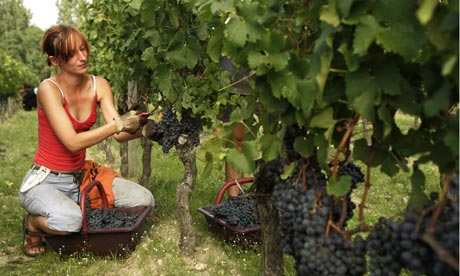
But harvested it is, by hand,

http://static.guim.co.uk/sys-images/Guardian/Pix/pictures/2010/2/17/1266439813211/Harvester-Picking-Grapes-001.jpg

and consumed it is, with gusto.

https://encrypted-tbn0.gstatic.com/images?q=tbn:ANd9GcR2eoJBzAiwrgJt–qDMOHf4_JGFQ22y_W6oqEOOWjncWWKPwwPRw

Actually, this vin primeur trend now includes fifty-five other French Protected Designations of Origin that may be savored starting from late November. They have less tannin and thus more fruity residual flavor that allows connoisseurs to wax eloquent and expose their cultured selves. They also allow plain and simple folk the pleasure of enjoying a chilled, naturally fruity wine with their favourite home-made canapés.

http://t3.gstatic.com/images?q=tbn:ANd9GcTi3V22-IoTMsYdvcr9U3B8Idhkn3Xf7IwYInJLKw9XOFS7f1MpuziOKdwWvw

My favourite primeurs are Côtes du Rhone, Ardêche and Gaillac.


http://t1.gstatic.com/images?q=tbn:ANd9GcSFPwVEX0nsMO3IPGCA-G7WXeaUPue8pW6-726Qmw01GxLblUgwY92DPQcvwAhttp://maison1.advcdn.net/images/medias/000/010/000010868/600.jpghttp://www.danstontarn.fr/wp-content/uploads/2013/10/gaillac-primeur-2013.jpg

Do try these primeurs with a mild chicken korma accompanied by fluffy white basmati rice — oh yes, and don’t forget the handful of crudités on the side!

A votre santé et bon appétit mes amis!

India: The First Soft Power

The Durga Vahini women’s movement limited to two districts of India is part of that nation’s latest three-hundred year old Hindu revival. The Canadian filmmaker Nisha Pahuja’s quest to make a documentary on this movement finally ended in success. Writing for the BBC, she raises questions but expresses no alarm at this movement, based on pride and history — The World Before Her https://www.youtube.com/watch?v=umjDyRaikqQ  and http://www.bbc.com/news/world-asia-india-29798148).

The more one studies India’s history, the more it eludes one’s grasp, retreating constantly into the mists of time in a tantalizing dance. This mother lode of all that is Indo-European can stake its claim on the basis of holding the archives. Other components of and claimants to Indo-European roots only have oral history on their side, but India has the Vedas – sacred documents dated from between 1800BC to 3000BC, or even earlier.

https://encrypted-tbn3.gstatic.com/images?q=tbn:ANd9GcSxAz1NLs_qBa5A921-5AlCVrcODqjmgT8J7DNBg0mx5l0c4xGz

The total time span allotted to Indian history is so wide that were a subject called The Rise and Fall of Indian Civilization be introduced in academia, it would fall flat on its face. Indian civilization demands the plural, despite its continuing integral core. It expanded and receded several times, the components cohabiting comfortably with each other’s characteristics.

http://ptdeepali.files.wordpress.com/2012/12/lothal.jpg?w=640

 One of the most remarkable features of this civilization is its influence which stretched from Macedonia to the limits of East Asia without any evidence of hard power projection. India can bask in its status as a pioneer of Soft Power.

That finesse did not stop other civilizations from penetrating India’s refined screen to raid, loot and settle as minority rulers over much of its territory.


http://www.indohistory.com/images/medieval/mahmud_ghaznavi_conquests.jpghttp://static.guim.co.uk/sys-images/Guardian/Pix/pictures/2012/11/5/1352139688017/British-Empire-Throughout-008.jpg

The last ones to do so failed to integrate, were unable to settle and had to leave sixty seven years ago, leaving behind a free press and the cherished structure of parliamentary democracy.

The sheer force and prestige of Nehru’s personality dragged India through its period of socialism, but since its heyday there has been a turnaround. The most positive result of that is the continuing economic growth and progressing health and literacy rates despite the population increase since 1947.

Famine, rife under the Mughals and the British, has disappeared.

India is coming back into its own.

On the flip side, some Indians, basking in their new-found independence, seem to be taking the occasion to show that they are not softies. That they aren’t is an opinion buoyed by the reputation of the Indian Army for efficiency, not to speak of its millennia-old battle record. Militant groups and movements appear to be challenging world-wide extremist obediences in a race for each to prove that they’re the toughest on the block.

The Durga Vahini just might end up being one such movement, the female equivalent of the Bajrang Dal and part of the Vishva Hindu Parishad. The stated purpose is to involve more women in a Hindu revival through physical, mental and knowledge development in order to involve them in social services.

Considering India’s population of 1.252 billion, there are only about 8000 women involved in Durga Vahini. The movement is more local than national and, in general, most Indian Hindus have no hang-ups about settling scores with remnants of erstwhile minority rulers. Shouldn’t have any, in principle. Not after the last Hindu revival.

In the 18th century, the Marathas, by becoming the pre-eminent power in India effectively eclipsed the effete Mughals of that time, engendering a Hindu revitalization that continues to grow in most desirably impressive directions.

https://encrypted-tbn0.gstatic.com/images?q=tbn:ANd9GcQYG HElO7ENOkptBPbArAgYSCXv85vsuTaeZ7VjOWiApEmFFNRzw

It is confidently hoped that this balance will be maintained in a world where perceptions and soft power have superseded the old hard power, as obsolete as a nuclear weapon!

The world’s soft power pioneer is no doubt aware of this.

Many others are!

http://qz.com/271585/from-the-buddha-to-bollywood-to-bpos-a-brief-history-of-indias-soft-power/

Eight Ebola Lessons

http://www.downtoearth.org.in/dte/userfiles/images/graph_big.jpg

There is a step-by-step solution to fighting the disease. 

We are blessed with being Ebola-free. Now that we better understand its epidemiology and the repertoire of medical and health interventions required to curb its spread, it will take some doing to keep it that way.

Health Minister Aaron Motsoaledi is working tirelessly and doing the best he can, but he must be supported and pressed to do a great deal more to ramp up our state of Ebola readiness.

What lessons have we learnt from the Ebola crisis so far?

… Read more by Wilmot James, City Press, South Africa :http://www.citypress.co.za/columnists/8-ebola-lessons-south-africa/

(more…)

Asian and White school results in the United Kingdom

https://encrypted-tbn2.gstatic.com/images?q=tbn:ANd9GcS1hLhW98TEaF-dLNf1MraQJ4kYx7cKZu_QI6C6VQevZx_wNo0Pag

On November 12, Nihal, my favourite BBC Asian Network DJ got more of my attention than usual. I learned that children of Indian immigrants in the UK obtain the highest GCSE scores. That started me thinking, and for a change it didn’t hurt – well, maybe just a little.

The two-nation theory is believed to have, among other things, led Muslims to demand their severance from the rest of India by creating Pakistan. Mission accomplished, the theory often carries more weight in its political rather than historical context.

http://njisacf.files.wordpress.com/2009/02/wagah.jpg?w=320&h=389

However much Muslims of Pakistan may be tempted to graft their historical cultural roots on their belief system and end up in a Middle-Eastern state of Semitic mental limbo, the lure of the Indo European macro culture is as irresistible as it is undeniable. More so when they realize that the response from the Middle East is disproportionate to the initiative.

So the distinction between the contemporary application of the two-nation theory and the reality of the historical Indo-Euroean roots is a yo-yo comet leaving a zig-zag trace.

And there things stood until Nihal unwittingly landed on this comet to set my head spinning.

So I spent some time in space and here’s what I found from reputable sources such as, among others, the BBC’s Education Correspondent and the Centre for Crime and Justice Studies.

http://www.crimeandjustice.org.uk/resources/primary-and-secondary-education-and-ethnic-penalty

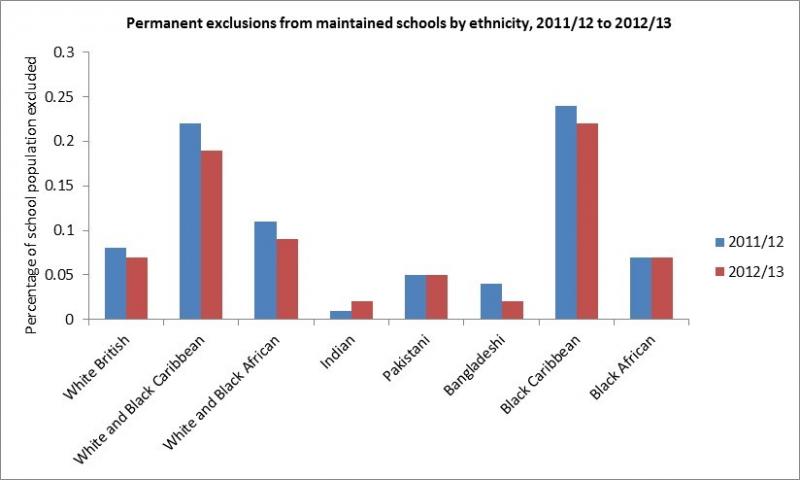
The progress rate of British Pakistani children might outstrip that of their white and British Indian peers, but a lead of thirteen points is not a lead of three plus one equals four as Einstein would have made it and ended up with another atomic split.

Poor results are also explainable by permanent exclusion. The rate of British Pakistanis at 0.05% also exceeds the almost 0% of British Indians although it lags honorably behind the nearly 01% of White British — funny, I wanted to write British White, but it kind of ended up reminding me of the latest upgrade in a teeth whitener.

https://encrypted-tbn1.gstatic.com/images?q=tbn:ANd9GcSbHeVcUle5TIObaBaQT9zCdT1ZfArtRVCb0gyZtxEl2Ou5eunqAA

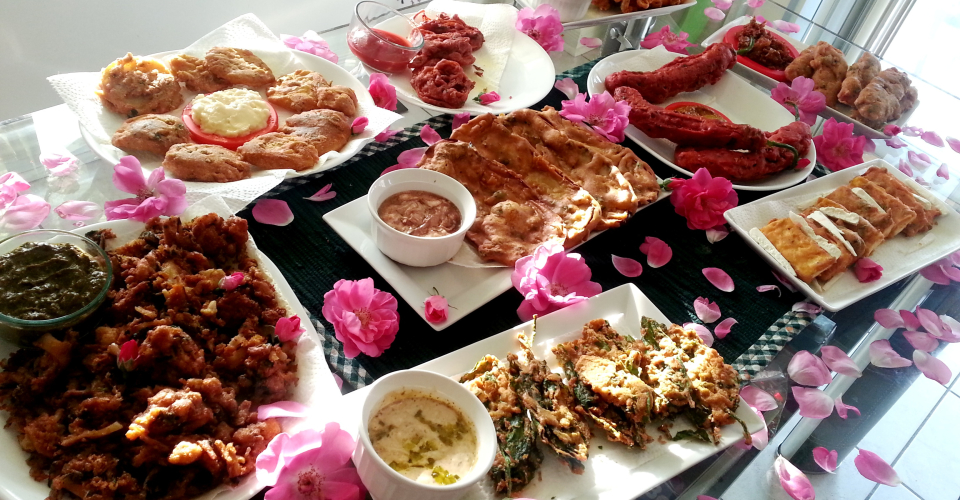
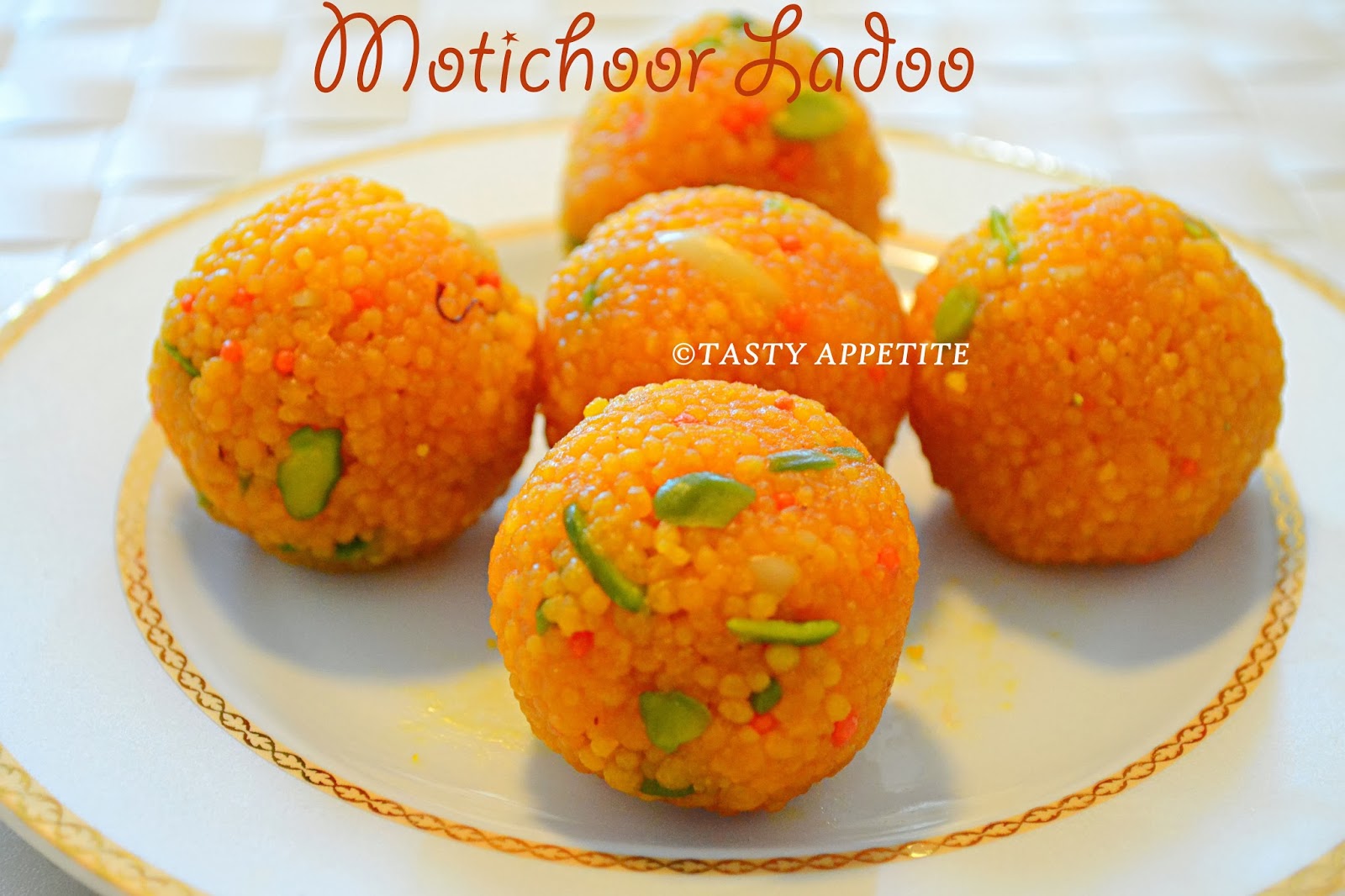
Which means, the children of Indian and Pakistani parents are more British since they are British first and not second even if some of their parents  are accused of cheering the Indian and Pakistani cricket teams in the UK. And over mounds of artery clogging samosas and pakoras fried in ghee followed by moti choor luddoos and kaju katli they still argue about the one versus two-nation theory.

http://omgies.com/wp-content/uploads/2014/09/20140819_183219-960x500_c.jpg;https://writegill.com/wp-content/uploads/2014/11/c60ca-lthree.jpg; http://i.ytimg.com/vi/RaTs6iXFA9Q/maxresdefault.jpg

Thanks to DJ Nihal, that argument can be laid to rest, substituted by the relative merits of butter chicken and palak paneer savouries.

https://encrypted-tbn3.gstatic.com/images?q=tbn:ANd9GcQ09tE-glYqXDB51mM2yiPOT0bE7MuLDDVrWt_XhpnqsbzldXkAeA; https://encrypted-tbn3.gstatic.com/images?q=tbn:ANd9GcQGkjuFxVMhdjnqenPJ_IxvwGU_R_H-ewOdrPg7XXXJ8y0rJCWg; https://encrypted-tbn1.gstatic.com/images?q=tbn:ANd9GcSQSD1M1rWR2dXJJKKt93A32ORwuXXUPej7Ez1XLj3JnrI3FW_E

Safer.

Clearer.

No possibility of a cease fire violation — not in the UK — or one may hope!

https://encrypted-tbn2.gstatic.com/images?q=tbn:ANd9GcQcJxLe2IPPkKacqGAyt0i4HPxXSDv3xbCngI9dEpW05FpfJom7

How the British are still Rewarding Punjab — in the UK!

My friend and course-mate Colonel Qaiser Rashid sent me one of Ayaz Amir’s recent articles.

Mr Ayaz Amir, is an excellent writer whose sense of outraged justice over the treatment of Pakistan’s Christian minority has received my gratitude in writing. His nifty penmanship alone makes him worth reading while his ideas are food for thought.

How The British Rewarded Punjab is just such an idea, published in The News on November 14, which did feed my thoughts on the remembrance of Punjabi World War I Victoria Cross recipients during the commemoration ceremonies of that War. My thoughts were well fed, though perhaps in a direction not forseen by Ayaz Amir Sahib. Unless he wished to inspire debate on an open subject.

“The soldiers in question, who were undoubtedly heroes, were fighting not for India but for the greater glory of the British Empire.”

The fine article then goes on to cite historical reasons for downplaying the achievements of these hereditary warriors.

Now that is a pity.

These soldiers were neither fighting for India nor for the British Empire. They were Rajputs, Jats, Pashtuns, Dogras, Maharathas, Garhwalis, Gurkhas — Sikhs, Muslims, Hindus and Christians — you name it! Every fighting brand nurtured in the sub-continent for the duration of its history was eager to prove its mettle in pursuit of its ancestral tradition.

Closer to home are the two Victoria Cross recipients from Pothohar, both proud Rajputs, an assertion which implicitly acknowledges their Hindu Kshatriya roots, and the dharmic justification for The Way of the Warrior. When their ancestors became Muslim, they saw no conflict of interest in continuing this tradition within the framework of their chosen belief system.

And that is what led around 350 million soldiers to fight in both World Wars.

Plus the rewards.

Agricultural land in the Punjab opened up by the canal irrigation system neither belonged to the Joneses nor the Khanses, Singhses or the Mallses. Accordingly, the gora generously allotted land in recognition of services rendered at the peril of their lives to warriors considered superior to their own (not a bad promotional point …!).

On this issue at least, Indians and Pakistanis don’t fight each other!

Led by Urdu, Hindi and Marathi speakers, the urban, educated class bitterly criticizes Punjabis for not coming to the aid of the Urdu and Maharashtri speaking leadership of the 1857 War of Independence. Debauched or inept leaders had been propelled to the forefront of events by rebel Sepoys who even called Bahadur Shah Zafar “Ohé Budhae” when he hesitated to accept the honour being bestowed upon him.

I really don’t know since I wasn’t there but a gora called William Dalrymple told me that one!

The Punjabi disdain for the 1857 War of Independence (the odd chieftain apart) has its own justification.

Firstly, the leadership was as poor as the excellent illustration in Satyajit Ray’s movie, The Chess Players. The Punjabis could see no reason to shed their blood in order to restore decadence.

Secondly, from 1758-1761 the Maharathas attacked and plundered the Punjab, demanding their one-fourth share — chauth — from its farmers.

Whatever level of literacy Punjabis might have has never adversely affected their memories!

Thirdly, during the Sikh Wars of 1845-1849, nearly two thirds of the Order of Battle on the British side consisted of Uttar Pradesh soldiers known to the Punjabis as poorbiyas. They are remembered for eating leftovers of the British to kick their Punjabi brethrens’ bootyas.

A decade later, their squeals for help from a people whom they were convinced had dysfunctional memories fell on deaf ears, just as the Punjabi Sirdars’ badrak roars of help were ignored by their Maharatha and UP brethren.

Their belief system notwithstanding, South Asian warriors have fought through the ages for whoever offered them decent employment, good leadership and a chance to practice their dharma.

They fought for Hindu, Muslim, Sikh and Christian employers.

They fought within the sub-continent and outside of it.

Husseini Brahmins are Mohyal Brahmins, like Sanjay Dutt, who are supposed to have been the guardians of the bait-ul-mal treasury at the Battle of Karbala — October 10, 680 — that involved Hazrats Hassan and Hussein!

And at the end of the day, the real reward is being reaped by around five million South Asian immigrants in Britain — 1.5 immigrant per active warrior in both World Wars. Now that’s what I call a reward!

These warriors were neither traitors, nor stupid little brown men exploited by a colonial power for a fistful of rupees and hot dal roti. They maintained the finest manly traditions of Indo-European culture and improved their family fortunes at sword-point and at the peril of their lives.

Let us honourably remember them as they and their highly educated descendants would prefer and not as a platform for political determinism.

Stunning Portraits Of The World’s Remotest Tribes Before They Pass Away

http://www.boredpanda.com/vanishing-tribes-before-they-pass-away-jimmy-nelson/

Living in a concrete box with hot water pouring from the tap, a refrigerator cooling our food and wi-fi connecting us to the rest of the world, we can barely imagine a day in a life of, say, Tsaatan people. They move 5 to 10 times per year, building huts when the temperature is -40 and herding reindeer for transportation, clothing and food. “Before They Pass Away,” a long-term project by photographer Jimmy Nelson, gives us the unique opportunity to discover more than 30 secluded and slowly vanishing tribes from all over the world.

Spending 2 weeks in each tribe, Jimmy became acquainted with their time-honoured traditions, joined their rituals and captured it all in a very appealing way. His detailed photographs showcase unique jewellery, hairstyles and clothing, not to forget the surroundings and cultural elements most important to each tribe, like horses for Gauchos. According to Nelson, his mission was to assure that the world never forgets how things used to be: “Most importantly, I wanted to create an ambitious aesthetic photographic document that would stand the test of time. A body of work that would be an irreplaceable ethnographic record of a fast disappearing world.”

All of his snapshots now lie in a massive book and will be extended by a film (you can see a short introduction video below). So embark on a journey to the most remote corners and meet the witnesses of a disappearing world. Would you give up your smartphone, internet and TV to live free like them?

Source: beforethey.com Book: Amazon.com

Kazakh, Mongolia

Himba, Namibia

Huli, Indonesia and Papua New Guinea

Asaro, Indonesia and Papua New Guinea

Kalam, Indonesia and Papua New Guinea

Goroka, Indonesia and Papua New Guinea

Chukchi, Russia

Maori, New Zealand

Gauchos, Argentina

Tsaatan, Mongolia

Samburu, Kenya

Rabari, India

Mursi, Ethiopia

Ladakhi, India

Vanuatu, Vanuatu Islands

Drokpa, India

Dassanech, Ethiopia

Karo, Ethiopia

Banna, Ethiopia

Dani, Indonesia and Papua New Guinea

Maasai, Tanzania

Nenets, Russia

First Indian Warrior to receive the Victoria Cross in France, World War I

Victoria Crosshttp://www.historytoday.com/sites/default/files/507594_qqIE4D94.jpg.img_.jpg

The Victoria Cross is Britain’s highest military award for conspicuous battlefield gallantry.November 23, 1914, Battle of Festubert, France.Undeterred by bullets and grenades ripping the night sky, twice wounded in the head and once in the arm, the Indian army Naik (Corporal) steadily moved forward with tactical perfection as part of the first trench raid of World War II. As written in Philip Mason’s authoritative A Matter of Honour, the blood drenched Naik single-handedly bayoneted five Germans and survived to become the first Indian warrior to receive the Victoria Cross on French soil.

https://encrypted-tbn0.gstatic.com/images?q=tbn:ANd9GcT_gVXOR7q7idmuei6IXh_q4ykY8G-M5XusxfqwJ5OeazvLF1Y3Gg

The Germans died for their fatherland in a cold, hostile land at the hands of a diminutive fighter from a faraway land.The Hindu Kshatriya hereditary warrior followed the dharma of his caste.

He was from the northeast Indian region of Garwhal, whose clans are as renowned for their battlefield ferocity as for being law-abiding.

Naik Darwan Singh Negi of the 1st Battalion of 39th Garhwal Rifles served with honor and conspicuous gallantry..
While receiving the Victoria Cross on December 5, 1914, he was asked if he wished for something.
He asked for a school in his district, Chamoli.
The request was granted.
Negi served until 1924, obtaining the rank of Subedar (Warrant Officer), when he took premature retirement, devoting his time to uplift his underdeveloped district in a backward region. He helped war widows, opened a school in his village and got the authorities to provide road and rail links to his village.
On 24 June 1950, he died peacefully of natural causes, in Kafarteer Village, Uttar Pradesh, India.

What the Fall of the Wall Did Not Change

What the Fall of the Wall Did Not Change is republished with permission of Stratfor.”